Discover why plaza-view real estate in Panama's historic Casco Viejo commands a 10-30% premium over waterfront properties, and explore the rare Gran Central development which combines irreplaceable views with modern amenities.
When most people think of premium real estate, the image is almost always the same: an apartment tower with floor-to-ceiling windows facing the ocean. Water view is the universal shorthand for prestige, and markets from Miami to Monaco, from Sydney to Singapore, have priced that premium accordingly.
But there is another category of prime real estate that is far less discussed globally, and yet equally compelling for those who understand it — plaza-front properties in historic districts.
The Plaza as an Asset Class
In the great historic cities of the world — Rome, Barcelona, Cartagena, Havana — the central plaza or piazza is everything. It is the original heart of urban life: the place where commerce, culture, community, and memory converge. And apartments that front these plazas command a consistent, documented premium over their neighbors.
Research across European and Latin American historic districts shows that plaza-front or direct-view units typically trade at 10–30%+ higher per square meter than comparable units just a block or two away. The reasons are intuitive: the views are irreplaceable, the ambiance is unmatched, and — critically — supply is limited. Heritage preservation laws and the simple fact of history conspire to keep the supply of true plaza-front properties at a permanent low number.
Casco Viejo, Panama — Where the Premium Is Especially Compelling
Panama City's Casco Viejo is one of Latin America's most celebrated UNESCO World Heritage districts, and it operates by the same rules — but with dynamics that make it particularly attractive for investors right now.
The neighborhood's four major plazas — Plaza Bolívar, Plaza de la Independencia (Plaza Mayor), Plaza Herrera, and Plaza Catedral — each anchor a distinct character within the district. Together, they define the social, cultural, and aesthetic hierarchy of Casco Viejo. And the apartments that face them are in a category of their own.
Market data tells a clear story. Plaza-front apartments in Casco Viejo price trade at a premium that reflects a 15–30% uplift for direct plaza frontage, consistent with what we see in comparable historic districts worldwide. Total stock is tiny: across all four major plazas, the inventory of true plaza-front residential units is estimated well under a 100 apartments. In any given year, only a handful of these units come to market.
The logic is straightforward: when you combine an irreplaceable view, low supply, and a neighborhood that continues to attract international buyers, expats, and upscale tourism — you have the conditions for sustained, structural appreciation.
The Challenge — and the Opportunity
For years, the idea of buying a plaza-front property in Casco Viejo meant accepting a trade-off: the history and beauty of a 19th-century building, but without the amenities that modern buyers expect. Difficult access, no parking available. No elevator. No pool. No gym or co-working space. The UNESCO framework means that new construction is tightly controlled and building alterations are heavily restricted.
This is why Gran Central represents something genuinely rare. It is the best of both worlds.
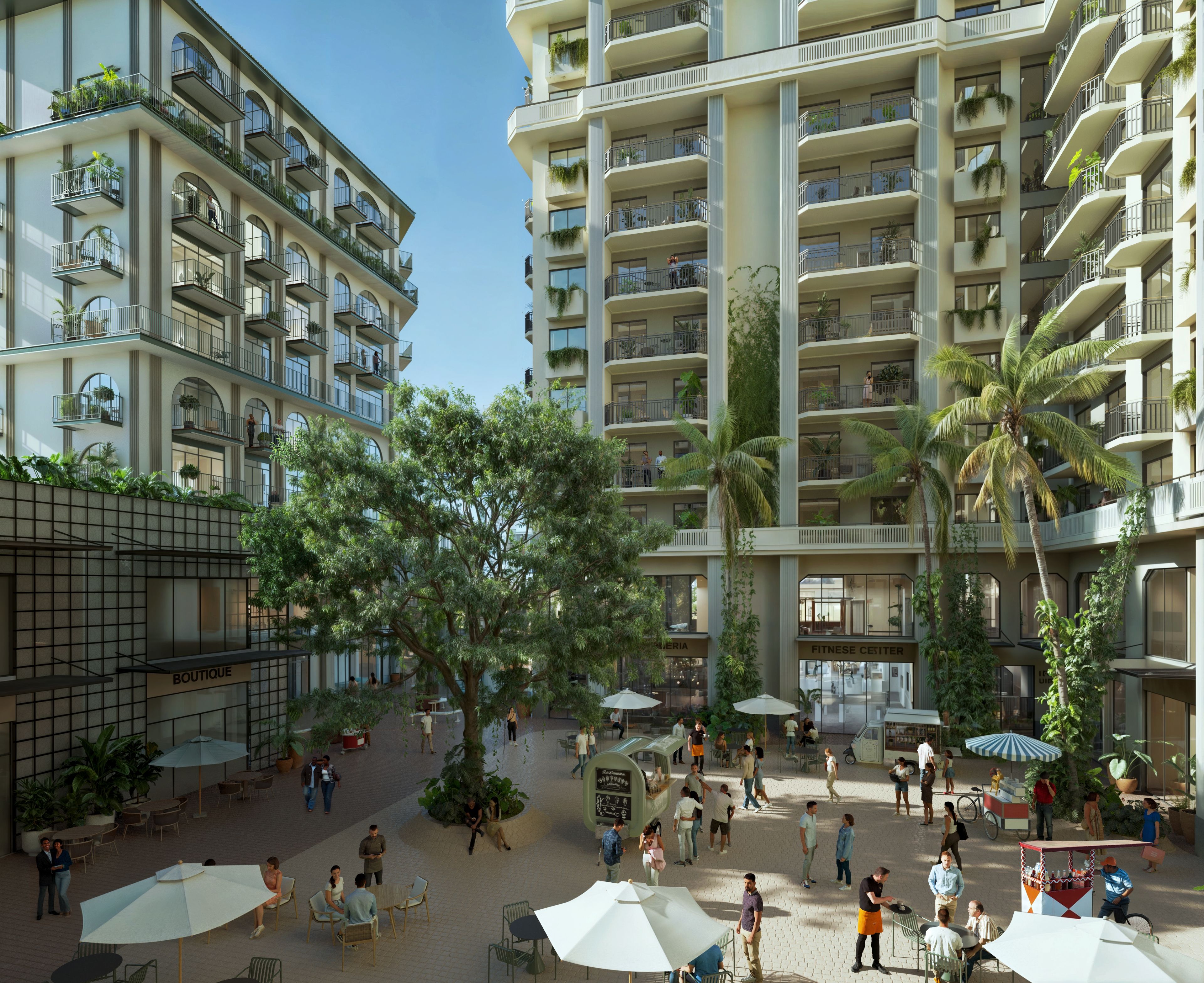
Gran Central is a pre-construction development in Panama’s historic district offering direct plaza-view units. It is designed with a full suite of modern amenities: elevator, swimming pool, gym, and co-working space in a 100% walkable environment. This combination —historic location, true plaza views, and contemporary residential infrastructure is what makes it a one of a kind.
A Before and After
Gran Central started demolitions and it is soon to announce its official construction start. This is relevant for two distinct reasons.
First, it is a pricing opportunity. Casco today is not what Casco was five or even ten years ago. The early-mover advantage in real estate is most powerful precisely when the asset is differentiated and not easily duplicated.
Second, the neighborhood itself is transforming. In February, Panama’s government announced $17M investment in public works in the area. The project encompasses the complete renovation of approximately 1.25 km of streets, redesigning them with a “complete streets” philosophy that widens sidewalks and prioritizes the pedestrian experience. Beyond the streets, the city is creating a network of beautiful new green spaces totaling more than 4,900 square meters, including the creation of several “pocket parks”.
Anyone who has followed Casco’s real estate knows today’s Casco is not the Casco Viejo of five, ten nor twenty years ago— it has undergone a remarkable, well-documented revitalization. Now the wave has reached the very entrance of the historic district, and it is offering in Gran Central a combination of factors that is nearly impossible to recreate.
A Blend of Two Worlds — At a Historic Inflection Point
The investment thesis for Gran Central is ultimately simple: it offers the best of both worlds.
On one side, the historic environment — Gran Central is a 100% walkable district fully connected to the UNESCO heritage site.
On the other side, modern living — the underground infrastructure (including parking), amenities like swimming pools, libraries, co workings, gym in a context of a boutique collection of buildings where each buyer and tenant can find a home, a place to enjoy or to invest.
For investors who understand what makes plaza-front properties special — the same investors who recognize the value of a Piazza Navona address in Rome or a Plaza Reial apartment in Barcelona — Gran Central represents a rare opportunity, a different type of scarce asset class.
But beyond the data, anyone who has ever watched a sunset from one of those balconies, surrounded by the people they love, already understands the real value. Numbers just confirm what the heart already knows.